America’s 250th Birthday: The History Behind Beloved Wedding Traditions and Their Origins
As the United States celebrates its 250th birthday, it’s the perfect time to look at the traditions that have shaped American weddings for generations. Like the USA itself, American wedding traditions are a rich blend of cultures, customs, and histories that are brought together from around the world. From ancient Roman rituals and European wedding customs to influences from diverse communities across the nation, many of the wedding practices we know today tell the story of America’s unique cultural heritage.
Let’s take a closer look at the traditions and the history behind them!
White Wedding Dress
Queen Victoria popularized the white wedding dress when she wore a lace white dress at her wedding to Prince Albert in 1840. Before then, many wedding dresses were a variety of different colors and shades (red being a bridal favorite!).
Something Old, New, Borrowed and Blue
This tradition comes from an Old English rhyme that dates back to 19th-century Lancashire. The whole rhyme actually has one extra line, which we’ve dropped in modern-day!
Something old,
something new,
something borrowed,
something blue,
and a [silver] sixpence in her shoe.
It was believed that if the bride carries these items down the aisle, she’ll enjoy a successful and happy marriage.
Saving the Top Tier of the Wedding Cake
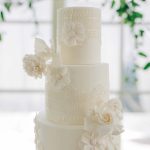
This tradition started in the 18th century in Great Britain. Back then, the top layer was usually a cake that lasted longer, like a fruit cake or chocolate cake. Originally, the couple would share the top of the cake at the christening of their first child, since it was expected to have a child within the first year of marriage. Today, we’ve changed that tradition to save the top layer for a couple’s first anniversary!
Throwing Rice
Throwing rice at weddings is a tradition that spans centuries and cultures, with nearly all versions sharing a common purpose: wishing newlyweds prosperity, fertility, and good fortune. In ancient Celtic communities, guests tossed rice, millet, and other grains to honor spirits and bless the couple with abundance, while the Ancient Romans scattered wheat as a symbol of fertility and a fruitful marriage. In Italy, wedding guests often threw candies or sugared almonds to represent sweetness and happiness, while in Poland and other parts of Eastern Europe, rice became a symbol of wealth, abundance, and the hope for a thriving future. In Morocco, dried dates and figs were traditionally used to convey prosperity and fertility, and throughout India, flower petals are commonly showered over couples as a blessing for beauty, joy, and a successful marriage. Although the items vary from culture to culture, the symbolism remains remarkably similar, making the tradition of showering newlyweds with blessings one of the most universal wedding customs in history.
Jumping the Broom
Though historians debate the exact origins, this tradition is deeply rooted within the African American community during slavery in the United States. They were often denied the legal right to get married, so couples would have ceremonies that included jumping over the broom as a symbol of their union and commitment.
During the late 20th century, many African Americans reclaimed jumping the broom as a way to honor their ancestors, celebrate resilience, and connect with their cultural heritage.
The Veil, Cord, and Coins
This is a traditional Filipino wedding practice with roots in the country’s Spanish colonial history and Catholic influence, blended with European customs! During the Spanish colonization in the Philippines, the veil and cord were introduced and became popularized in Filipino ceremonies. The veil represents the couple’s being “clothed as one”, while the cord is tied in a figure-eight to signify an unbreakable lifetime bond. The coins trace back to medieval Spanish traditions, where 13 coins are given as a symbol of the groom’s commitment to provide and the couple’s shared responsibility for prosperity.
5 Jordan Almonds
This dessert-based tradition comes from Green and Italian cultures. The bittersweet almond coated in sugar is also meaningful in itself, reflecting the idea that marriage brings both joy and challenges. The five almonds signify wealth, health, happiness, fertility, and longevity. They’re packed away in little tulle bags and placed at the reception tables as a party favor!
Burying the Bourbon
This is a tradition started somewhere in the south (jury’s still out exactly where it began). 1 month before your wedding day, it’s tradition to bury a bottle of bourbon upside down. It’s supposed to ward off rain and bring good weather. On the wedding day, it will be uncovered and enjoyed by the wedding party!
Which wedding traditions are you adding to your wedding day?